

Hire Smarter from July: How New Apprenticeship Funding Makes Growing Your Workforce More Affordable
With ongoing skills shortages across engineering, manufacturing, and logistics, many employers are asking the same question: How can we bring in new talent without stretching budgets?
The latest government apprenticeship funding update offers a clear answer.
From July onwards, employers, particularly non-levy paying businesses, can benefit from increased financial support when hiring young apprentices. In practical terms, this means bringing in new staff is now significantly more affordable than many businesses realise.
For companies like yours, this is an opportunity to strengthen your workforce, close skills gaps, and build a pipeline of future talent without the full cost burden of traditional recruitment.
What the Government Will Contribute
Here’s a clear overview of the funding and incentives currently available:
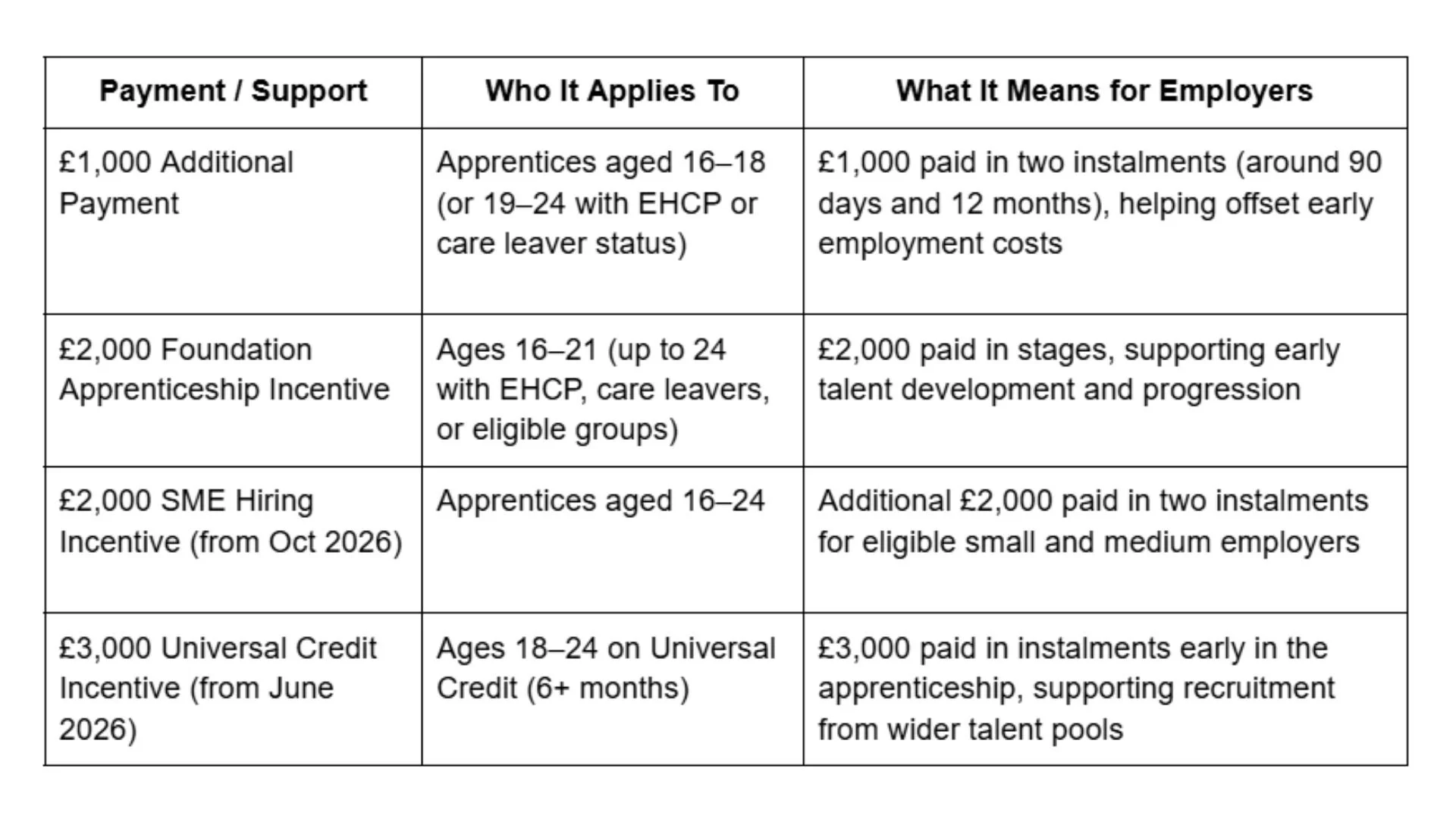
Payments are typically made in stages (for example, at around 3 months, 8 months, and/or 12 months, depending on the scheme), helping support cash flow over time.
What This Means in Real Terms
For a manufacturing, warehouse, or engineering business, hiring an apprentice from July could mean:
Receiving £1,000 shortly after the apprentice starts
Potential access to additional £2,000 or £3,000 incentives, depending on eligibility
Payments spread over the first year, supporting cash flow
While wage costs still apply, these incentives can reduce the overall cost of bringing someone new into the business, especially in the early stages.
Why This Matters for Engineering, Manufacturing, and Logistics Employers
For many businesses, recruitment has become both costly and unpredictable. Apprenticeships offer a more controlled, cost-effective alternative, especially with this level of government support.
1. Address Skills Gaps Without Overpaying
Engineering workshops, factories, and warehouses are all feeling the pressure of skills shortages. Apprenticeships allow you to train individuals to your exact standards from day one without competing in an expensive hiring market.
2. Build a Reliable Talent Pipeline
Rather than relying on reactive hiring, apprenticeships help you plan. You can develop future engineers, technicians, and supervisors internally to support long-term succession planning.
3. Reduce Recruitment Costs
With training heavily subsidised (or fully funded) and additional savings on National Insurance, the total cost of hiring an apprentice can be significantly lower than hiring experienced staff.
4. Strengthen Workforce Retention
Apprentices tend to stay longer because they’ve been trained within your business. This reduces turnover and helps build a more loyal, engaged workforce.
Why Many Employers Are Rethinking Apprenticeships
Apprenticeships are no longer just an entry-level option; they’re a strategic workforce solution.
With increased government support, they now offer:
Lower upfront hiring costs
Reduced ongoing employment expenses
A structured pathway to develop skilled staff
Greater control over workforce quality
For engineering, manufacturing, and logistics businesses in particular, this is a practical way to future-proof operations while keeping costs manageable.
Final Thought
As we move towards July, this funding update may influence how businesses approach recruitment, particularly where cost has previously been a barrier.
Apprenticeships are not the right solution for every role, but they are now more financially accessible than many employers assume.
If you’re unsure what funding or support your business may be eligible for, contact us, and we’ll talk you through it.
We can help you understand what applies to your business and how it fits into your wider workforce plans.
