

Apprenticeship Training in Education & Childcare: Your Complete Guide to Qualifications and Career Pathways
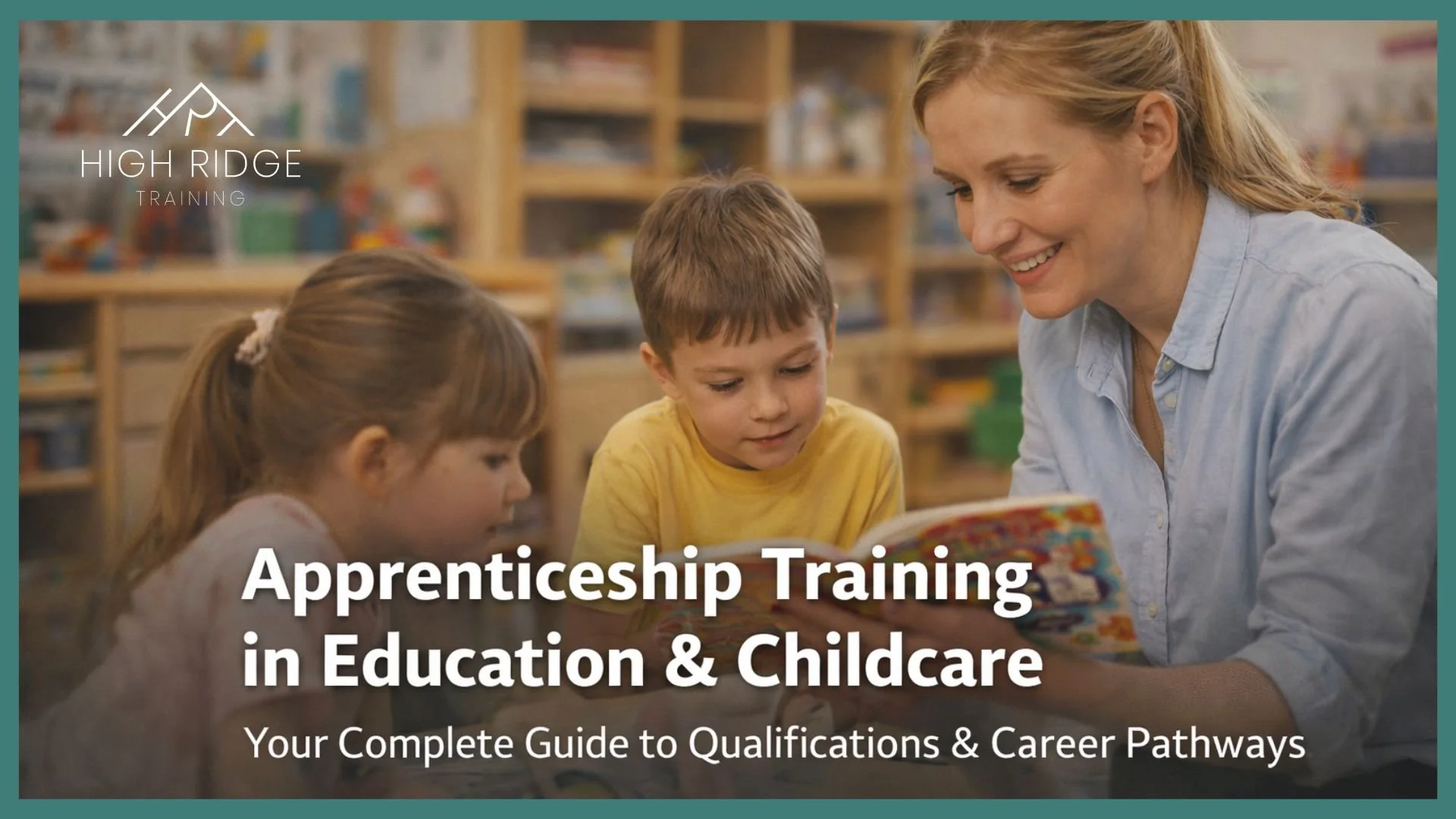
Working with children is both rewarding and impactful. If you love supporting development, nurturing curiosity, and helping young minds grow, apprenticeship training in education and childcare offers a proven pathway to launch or advance your career.
At High Ridge Training, apprenticeships blend hands-on work experience with formal learning, enabling you to earn recognised qualifications while building confidence and professional competence.
In this detailed guide, we unpack each key apprenticeship qualification from entry-level to leadership, highlighting what you’ll learn, how you’ll be assessed, the types of job roles you can step into, and how each qualification supports your career progression.
Level 2 Early Years Practitioner
What You’ll Learn
The Level 2 Early Years Practitioner apprenticeship builds foundational knowledge and practical skills needed to support children from birth to age five. Unlike a classroom-only study, this apprenticeship places you in early childcare settings where you will actively contribute to daily routines and learning experiences.
Core Areas Include:
Child development principles: understanding how children grow physically, emotionally, socially, and cognitively.
Observation and assessment basics: learning to observe children, record progress, and support developmental milestones.
Health, safety, and wellbeing: ensuring environments are safe, hygienic, and supportive.
Communication skills: engaging with children, families, and professionals with respect and professionalism.
Play as a learning tool: understanding how structured and free play support development across all areas.
How You’ll Be Assessed
Assessment includes workplace observations by your assessor, written assignments, reflective logs, and professional discussions. You’ll also complete a functional skills qualification in English and maths if you haven't already.
Practical Experience
You’ll work within nurseries, pre-schools, or childcare centres on real duties supporting mealtimes, assisting with creative activities, setting up safe play spaces, and partnering with senior staff.
Career Opportunities
Graduates often take on roles such as:
Early Years Nursery Assistant
Childcare Support Worker
Pre-School Practitioner
Playgroup Assistant
This qualification also acts as a foundation for further study or higher apprenticeships.
Level 2 Play Worker
What You’ll Learn
Play underpins children’s social, emotional, and physical development. The Level 2 Play Worker apprenticeship teaches you to nurture meaningful play experiences that are both fun and developmentally supportive.
Key Learning Themes:
Understanding play theory: why play matters and how it affects learning.
Planning play activities: developing games, arts, outdoor fun, sensory experiences, and teamwork challenges.
Child wellbeing: recognising developmental needs and emotional cues.
Risk assessment: ensuring play environments are engaging but safe.
Promoting inclusion: making activities accessible to all children.
How You’ll Be Assessed
Assessment includes portfolio work, practical observations in real play settings, reflective journals, and verbal discussions with your trainer.
Where You Can Work
This qualification is particularly suited to roles in:
Community play schemes
After-school clubs
Holiday activity programs
Children’s centres
Youth clubs
Play workers are often valued for creativity, enthusiasm, and the ability to encourage confidence and independence in children.
Level 3 Early Years Educator (EYE)
What You’ll Learn
The Level 3 Early Years Educator qualification is one of the most recognised early years credentials in the UK. It builds on Level 2 skills while enhancing your understanding of development and early learning practice.
Advanced Topics Include:
Child development across ages 0–5: detailed understanding of milestones and variations.
Observation, assessment & planning: designing activities tailored to individual needs.
Supporting speech, language & communication: practical strategies to stimulate language acquisition.
Enhancing learning through play: integrating literacy, numeracy, and creative skills in everyday activities.
Safeguarding & child protection: identifying concerns and knowing how to respond.
Inclusion & SEND support: understanding barriers to learning and adapting practice responsively.
How You’ll Be Assessed
You’ll build a professional portfolio containing observations, plans, reflections, written assignments, and case studies. Assessors will observe your practice in the workplace, and you’ll engage in professional discussions to demonstrate competence.
Job Roles and Progression
Level 3 EYE prepares you for roles such as:
Qualified Early Years Educator
Nursery Room Leader
Key Worker Lead
SEN Support Assistant
Early Years Planning Coordinator
Many Level 3 graduates go on to take supervisory or leadership responsibilities within early years settings.
Level 3 Teaching Assistant
What You’ll Learn
The Level 3 Teaching Assistant apprenticeship is ideal if you want to work within primary or secondary school settings, supporting pupils and teachers.
Key Learning Areas:
Supporting teaching and learning: helping deliver lessons and build understanding in core subjects.
Behaviour management strategies: techniques to promote positive classroom environments.
Understanding curriculum goals: particularly for English and maths development.
Supporting pupils with SEND: adapting activities and resources to ensure accessibility.
Effective communication: working with teachers, families, and specialists.
Safeguarding and child protection: recognising signs of need and understanding reporting procedures.
How You’ll Be Assessed
Assessment includes practical observations in school, written evidence, professional discussions with your assessor, and reflective records of your role in curriculum support.
Career Opportunities
With this qualification, you can pursue roles such as:
Teaching Assistant (TA)
Higher-Level Teaching Assistant (HLTA)
SEND Support Assistant
Early Literacy or Numeracy Support Worker
Achieving HLTA status depends on additional criteria set by employers or school trusts.
Level 5 Early Years Lead Practitioner
What You’ll Learn
The Level 5 Early Years Lead Practitioner apprenticeship is an advanced qualification designed for experienced practitioners ready to take on leadership roles.
Core Areas of Study:
Leadership and management in early years: supervising staff, mentoring colleagues, and leading teams.
Curriculum design and evaluation: creating evidence-based approaches that enrich learning.
Quality improvement strategies: evaluating practice and implementing improvements.
Partnership working: engaging with parents, professionals, and external agencies.
Legal and professional responsibilities: Ofsted expectations, safeguarding accountability, and policy implementation.
Financial planning and resource management: understanding budgeting and resource deployment (where relevant).
How You’ll Be Assessed
Assessment includes leadership case studies, workplace observations, reflective leadership evaluations, and strategic planning documents. Your assessor will observe your professional impact and capacity to lead change.
Job Roles and Career Progression
This qualification empowers you to pursue senior roles like:
Early Years Lead Practitioner
Nursery Manager
Centre Manager
Childcare Operations Coordinator
Early Years Consultant
Many practitioners with Level 5 qualifications go on to pursue degree-level study, teaching certifications, or senior leadership roles within educational organisations.
Why Choose High Ridge Training for Your Apprenticeship?
Personalised Support
From dedicated tutors to regular progress reviews, apprentices receive tailored guidance at every stage.
Recognised Qualifications
Every apprenticeship leads to a nationally recognised qualification, widely accepted by employers across the UK.
Career Advancement
Whether you’re entering the workforce or building on existing experience, these qualifications open doors to higher wages, leadership roles, and long-term career stability.
Practical Assessment Approach
Assessments are based on what you do as much as what you know, ensuring you graduate ready for professional responsibilities.
Final Thoughts
Apprenticeship training in early childcare is much more than formal education; it’s a gateway to meaningful work that shapes the lives of children, families, and communities.
From entry-level qualifications that help you understand core development principles, to advanced training that prepares you to lead teams and shape provision, High Ridge Training offers a clear, supportive pathway for lifelong career growth.
If you’re motivated by purpose, driven to make a positive impact, and eager to build a career you can be proud of, exploring these apprenticeship opportunities could be the first step toward an inspiring future.
Ready to begin your journey? Contact High Ridge Training today and take the next step toward a rewarding career in education and childcare.
